
The first thing most people do when a garage door won't open on a freezing morning is hit the remote again. And again. Maybe they walk over and jab the wall button a few extra times for good measure. It's tempting because it feels like the fast option — you're already running late, the door looks fine, and surely one more try will shake it loose. But if the bottom of the door is actually frozen to the slab, repeated button presses just force the opener motor to strain against ice it cannot break, which is a good way to strip a plastic gear or burn out a circuit board over something that started as a ten-minute fix. Pouring hot water on the seal is almost as common, and almost as counterproductive — it melts the ice for a few minutes, then refreezes into a thicker layer by the time you're back out at lunch.
The Symptoms That Show Up First
Before you figure out the cause, it helps to know which symptom you're actually dealing with, because they point to different problems.
- The door won't move at all, and the opener motor hums or clicks without lifting it — usually the seal-to-slab issue or a stripped gear.
- The door opens a few inches then stalls or reverses — often the opener's force settings fighting resistance it wasn't built for.
- The door moves, but slower and heavier than normal, with visible hesitation at the rollers — thickened grease or stiff springs.
- A visible frost or ice line along the bottom weather seal, sometimes with a faint cracking sound as the door first breaks loose.
- The remote works from inside the car but the wall switch seems delayed — more unusual, but worth noting if it happens repeatedly.
What a Technician Checks, In Order
1. The Bottom Seal Frozen to the Slab
This is the first thing worth ruling out, because it's the most common and the easiest to fix. After heavy rain — and this stretch of Tennessee gets plenty of it, especially when leftover moisture from a tropical system lingers before a cold snap moves in — water sits under the door and along the slab. When temperatures drop overnight, that water freezes and the rubber weather seal bonds right to the concrete. The fix is simple: gently break the ice along the seal with a plastic scraper or warm (not boiling) water applied directly to the ice line, never to the whole door. Once the seal is free, the door usually operates normally. If this keeps happening, it's often a sign the seal itself is worn, cracked, or no longer sitting flush — which lets more water pool underneath in the first place.
2. Track and Roller Lubrication
Next, a technician looks at the rollers and tracks. Standard grease thickens in cold weather, and rollers that were already a little worn or rusty from humid summers and moisture off nearby pines get noticeably stiffer once temperatures drop. This shows up as a door that's slow, noisy, or jerky rather than fully stuck. The fix involves cleaning old grease and grime out of the track, checking rollers for flat spots or rust pitting, and applying a lubricant rated for temperature swings — not household oil, which attracts dust and gums up fast.
3. Spring Tension in Cold Metal
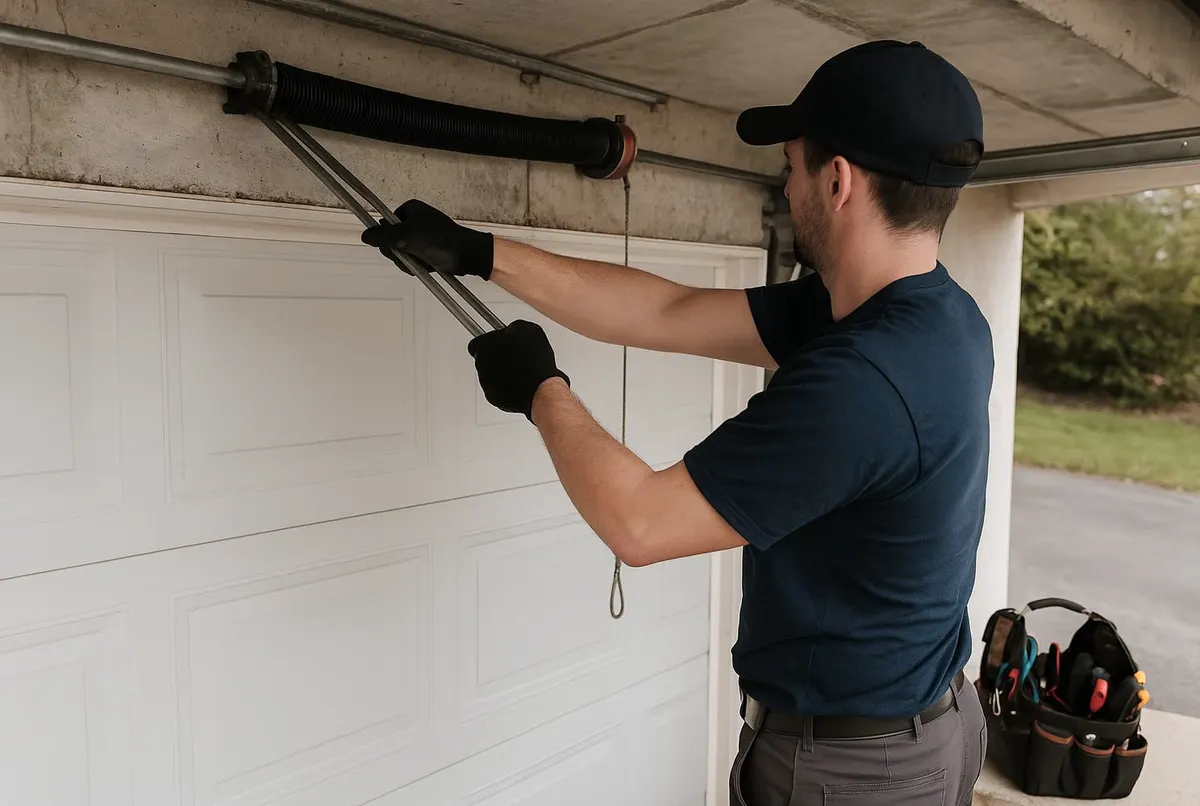
If the seal is clear and the rollers move freely but the door still feels heavy, the torsion or extension springs come next. Metal contracts slightly in cold weather, and springs that were already near the end of their lifespan lose a bit more lift than they would on a mild day. This is more noticeable on older systems that haven't been tensioned or serviced in a while. The fix is either a tension adjustment or a full spring replacement if the springs are worn, rusted, or original to an older door — not a job to attempt without the right bars and clamps, since a torsion spring under load can cause serious injury if it's handled wrong.
4. Opener Force Settings and Gear Wear
If someone has already been mashing the button against a stuck door, this is where the damage usually shows up. Openers are built to sense resistance and stop, but repeated attempts against a frozen seal or stiff springs can strip the internal gear or push the force settings out of calibration, causing the door to stall partway or reverse unexpectedly even after the ice is gone. The fix ranges from resetting the force and limit settings to replacing a stripped gear kit, depending on how much strain the motor took.
5. Electrical Connections and Sensors
Last on the list, because it's the least common cause here, is the electrical side — loose wiring at the wall switch, a sensor knocked slightly out of alignment, or connections affected by moisture that got in during a freeze-thaw cycle. This is usually only checked once the mechanical causes are ruled out, and the fix is typically a connection tightening or sensor realignment rather than a part replacement.
When to Call Loudon Garage Door
If your door is sticking to the slab every cold morning, moving noticeably slower than it used to, or stalling partway through its cycle, it's worth having someone look at it before an opener motor or a set of springs takes more damage than the ice ever would. Loudon Garage Door handles both Garage Door Maintenance visits — checking seals, rollers, and lubrication before winter fully sets in — and Spring Repair & Replacement for doors that have gotten noticeably heavier with the temperature drop. We'll track the issue down in the same order outlined above, starting with the cheapest and most likely fix first.
If your garage door in Loudon, Lenoir City, Tellico Village, or anywhere nearby is giving you trouble this winter, call Loudon Garage Door for honest, local service that gets it moving again — and keeps it that way through the next cold snap.