
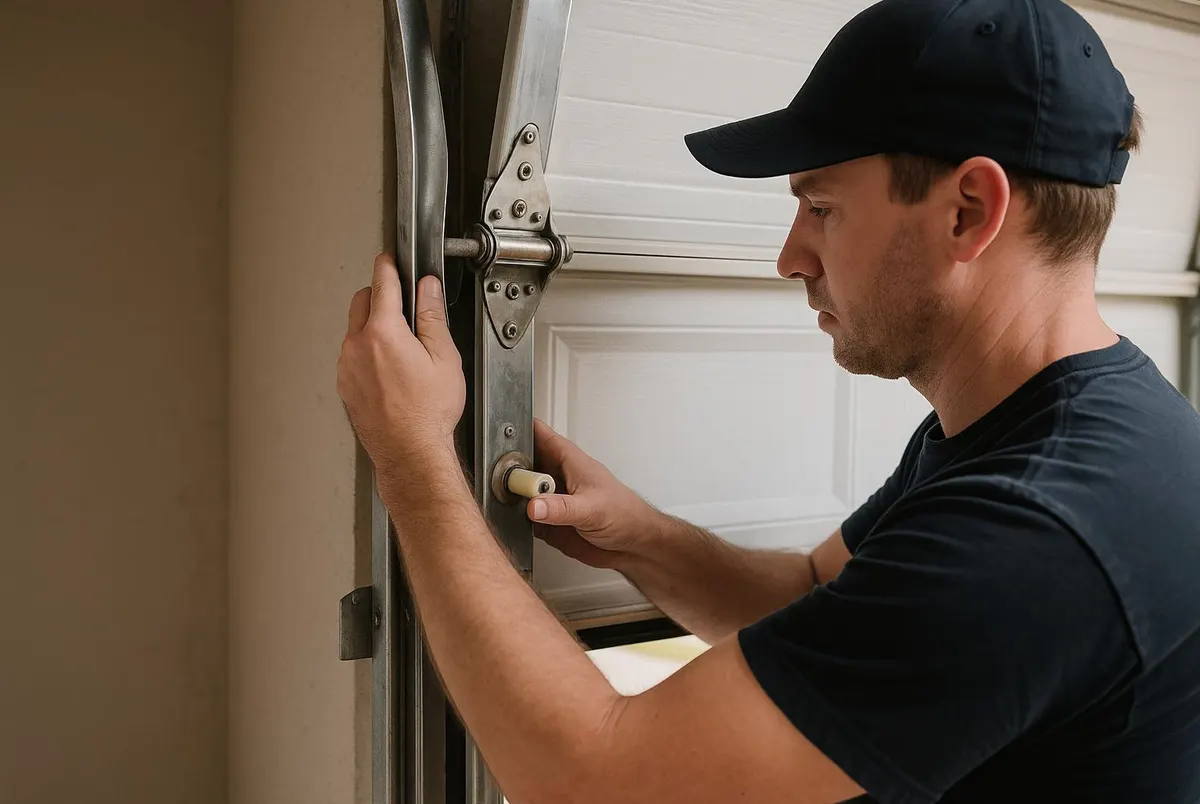
What a Worn-Out Seal Costs You This Winter
A cracked or flattened bottom seal looks like a minor cosmetic issue, but it rarely stays that way. Once the weather turns, that gap under your garage door becomes an open invitation for cold air, standing water from heavy rain, pine needles and grit, and the mice and insects looking for a dry place to wait out winter. Left alone through another cold season, a bad seal can lead to a warped wood door panel, a rusted bottom bracket, a waterlogged cardboard-core steel door, or a nest of pests you won't discover until spring. Fixing it now, before the first ice storm rolls through, is one of the cheapest and fastest repairs a homeowner can do.
Tools You'll Need
- Tape measure
- Utility knife
- Replacement bottom seal (bulb-style or T-style, matched to your existing track)
- Rubber mallet or soft-faced hammer
- Screwdriver or cordless drill
- Work gloves
- Shop vacuum or stiff brush
- Caulk gun and exterior-grade sealant (optional, for the threshold)
- Step ladder (for side and top weatherstripping)
Step-by-Step: Replacing the Bottom Seal
- Raise the door partway and prop it securely so you can see the full bottom edge and the retainer track it sits in.
- Identify your seal type. Most residential doors use either a bulb seal (a rounded tube) or a T-style seal that slides into a vinyl or aluminum track. You'll need the matching replacement.
- Measure the door's width and buy a seal a few inches longer than needed; it's easy to trim, hard to stretch.
- Pull the old seal out of the track by hand or with a flathead screwdriver if it's stiffened or glued in from age and UV exposure.
- Clean the track with a shop vacuum or brush. This is the step most homeowners skip, and it's often why old seals fail fast, pine needles, dirt, and old sealant pack into the channel and hold moisture against the vinyl.
- Feed the new seal into the track starting at one end, working it through with steady pressure. A rubber mallet can help seat stubborn sections without tearing the vinyl.
- Trim the excess with a utility knife so the seal ends flush with the door edges, no overhang that catches on the floor.
- Lower the door and check the seal against the garage floor in several spots. On sloped or uneven concrete, a seal that looks fine on one side may still gap on the other; that's a sign you may need an astragal-style seal or a floor threshold strip instead.
Weatherstripping Around the Frame
While you're at it, check the vinyl weatherstripping running up the sides and across the top of the door frame, the same strip of material that keeps wind-driven rain and pollen from sneaking in around the edges.
- Inspect for cracking, stiffness, or sections pulling away from the nailing flange.
- Pull off any loose or brittle sections by hand.
- Cut new weatherstripping to length and press it into the existing channel, or nail new flange-style strips into place with short galvanized nails to resist moisture and rust.
- Run your hand along the full length with the door closed to feel for gaps or drafts.
What a Homeowner Can Handle vs. What Needs a Technician
Bottom seal and frame weatherstripping replacement is genuinely DIY-friendly. It takes basic tools, no electrical work, and low risk if the door is properly propped. But stop and call a technician if you notice the bottom bracket is rusted or bent, the track itself is cracked or pulling away from the door panel, the door doesn't sit level on the floor even with a new seal installed, or there's water damage to the door's internal frame or insulation. Those point to a structural or alignment problem that a new seal won't fix, and working near a tensioned spring system or misaligned track is not a homeowner repair.
When to Call Loudon Garage Door
If your seals are fine but the door still lets in drafts, drags on the floor, or the opener struggles in cold mornings, it's worth a maintenance visit. Our Garage Door Maintenance service checks alignment, hardware, and balance, often the real reason a seal keeps failing. If the bottom bracket, track, or panel itself is damaged from water or impact, our Garage Door Repair technicians can assess and fix it properly before winter sets in.
Loudon Garage Door serves homeowners throughout Loudon, Lenoir City, Philadelphia, Greenback, Tellico Village, Sweetwater, Maryville, and Farragut. If you're searching for a garage door repair near Loudon 37774 or just want a seasonal check before the next ice storm, give us a call.